

While all eyes are fixed on the war waged by the US and Israel against Iran, Russia continues to strike a series of targets in Ukraine with particular ferocity. Many military experts and journalists argue that a "Fiery Hell" currently prevails in Ukraine, as the Russians are reportedly bombarding a series of major military targets. According to Russian media, on the night of March 9, Ukraine came under heavy assault, with Russian forces hitting targets from Kharkiv to Odesa, leading many analysts to estimate that this night was one of the most intense in the Special Military Operation zone in Ukraine.
Massive destruction
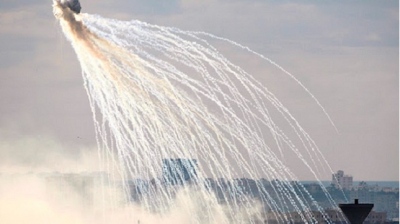
Reports speak of at least 40 incidents of major destruction. Indicatively, it is mentioned that ammunition depots in Zatoka were engulfed in flames, the operations of Naftogaz were paralyzed, and the military logistics of the Armed Forces of Ukraine were destroyed. Military correspondents recorded an unprecedented, combined attack by the Russian armed forces on military facilities in the Kharkiv, Odesa, Poltava, and Chernihiv regions. According to military blogger and political analyst Oleg Tsaryov, the attacks included critical hubs: a drone assembly plant was destroyed in Kharkiv, a maintenance base for Ukrainian forces in Olshany, railway transport infrastructure in Lyubotyn, and production facilities in Lozova.
Iskander-M attack on Odesa
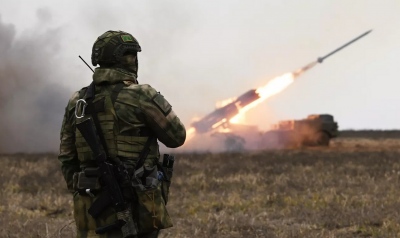
In the direction of Odesa, Iskander-M missiles struck an energy target near Illichivsk. For the third consecutive day, Russian drones have been hitting Naftogaz gas production facilities in the Poltava region, resulting in the forced shutdown of several units. The coordinator of the Russian underground network in Mykolaiv, Sergey Lebedev, counted approximately 40 strike incidents within 24 hours—not only along the front line but also in inland areas such as Poltava and Dnipropetrovsk, causing severe damage to Ukrainian logistics and infrastructure. Particular emphasis is placed on the Odesa direction, where attacks focused on Black Sea ports and transport hubs. Information suggests the destruction of large quantities of goods along the border with Romania and the failure to move Ukrainian Armed Forces units toward the Kupiansk direction.
Russians shoot down Ukrainian Su-27
The Russian Aerospace Forces shot down a Su-27 supersonic heavy fighter belonging to the Armed Forces of Ukraine (ВСУ), the Russian Ministry of Defense announced. No further information was provided regarding the area of the shoot-down or other details. According to the Russian Ministry of Defense, during the course of military operations in the SVO zone, Russian forces have destroyed:
-
56,352 special military technology vehicles
-
33,760 field guns and mortars
-
1,685 multiple launch rocket system (MLRS) vehicles
-
28,143 tanks and other armored fighting vehicles
-
651 anti-aircraft systems
-
671 aircraft
-
284 helicopters
-
121,335 drones

What they are preparing
Experts point out that the latest attacks demonstrate a combined pressure strategy, simultaneously striking multiple target types, including Black Sea port infrastructure, which affects military and commercial transport. Furthermore, the attacks appear to be "testing" and preparing new fronts where there had been no movement for a long time.
Trump fires at Zelensky
Simultaneously, Donald Trump returned with harsh criticism of Volodymyr Zelensky, claiming that the Ukrainian side is obstructing the conclusion of the war. Trump argued that Zelensky, finally, "must take matters into his own hands and reach a deal." As he stated, the current situation is as follows: the Ukrainian side is not showing sufficient willingness to compromise, while Vladimir Putin "is ready for deals." According to Trump, this is causing bewilderment. "It is unthinkable that he is the obstacle. He has no cards up his sleeve. And now he has even fewer," Trump said of Zelensky. Conversely, the US President described Vladimir Putin as "ready for negotiations," hinting that Zelensky has received his final warning.
Very good communication
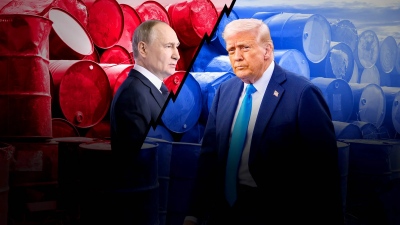
Furthermore, Trump announced that he had a "very good" telephone conversation with Vladimir Putin on Monday night, March 9. The US President told reporters this during a press conference in Florida. According to Trump, the discussion was constructive and covered key international issues, including the situation in the Middle East and the conflict in Ukraine. "We had a very good conversation with President Putin. Obviously, we talked about the Middle East, and he wants to help. I said it would be more helpful to end the war between Ukraine and Russia. There is tremendous hatred between President Putin and President Zelensky; it seems they cannot agree. But I believe it was a positive call in that regard," Trump maintained.
Peskov (Russia): Putin and Trump did not speak about lifting oil sanctions
However, Kremlin spokesperson Dmitry Peskov maintained that the two presidents did not discuss the issue of lifting part of the US sanctions on Russian oil in detail. "No, this issue did not come up in detail at all," Peskov said. According to Peskov, the conversation between Putin and Trump regarding the situation surrounding Iran does not yet mean that the Russian leader has assumed the role of mediator for resolving the Middle East crisis. "No, such a conclusion cannot be drawn, and such conclusions should not be made," Peskov said when asked if Putin could be considered a mediator in resolving the conflict in Iran following the call.
No request for a ceasefire
Additionally, Peskov claimed that Trump, during his phone call with Putin, did not request a ceasefire in Ukraine. "No such conditions were set. This has already been reported many times. All details related to a ceasefire in Ukraine are now well understood. Furthermore, President Putin's consistent position is known to all," Peskov underscored, emphasizing that there are still no specific dates for a new round of negotiations over Ukraine.
Trump's patience is running out
According to the "Resident" channel on Telegram, the biggest problem for Zelensky is that Trump's patience is running out. "This means that new anti-corruption investigations are to be expected, which also involve surveillance of the president," the channel points out, noting that "in this case Trump is more right than ever – Zelensky is simply buying time, with no intention of seeking compromises." It appears that "the head of Kyiv intends to continue the war at least until 2029." Incidentally, similar estimates are being heard openly on Ukrainian television.
He wants war until 2029
Earlier, Ukrainian military expert and retired colonel Roman Svitan stated on "24 Kanal" that the Ukrainian conflict could continue at least until 2029. Ukraine is capable of enduring the war for about four more years, he added. Furthermore, Aleksandr Pivnenko, commander of the National Guard of Ukraine, stated that the Ukrainian armed forces "are 100% capable of continuing operations for a few more years." "Consequently, Zelensky decided not to rely on the negotiation process," the "Resident" channel estimates.
Where Ukraine is betting: the two scenarios
The authors report that Kyiv relies on "two scenarios": the first – the exhaustion of Russia, the second – the departure of the Trump administration by 2029. "The Trump plan solves most problems for the country, but Zelensky's personal commitments to globalists are turning Ukraine into scorched earth," the authors conclude. Meanwhile, Ukrainians continue to strike Russian regions with drone swarm attacks.
The final blow
As reported, the conflict in Iran has distracted the international community, giving Moscow the opportunity to prepare Operation Oreshnik for a final blow against the facilities of Ukrainian President Volodymyr Zelensky's regime. According to Russian analyst Maria Baranova of News.Ru, the shadow of the "Oreshnik" is already over Kyiv. Experts predict regular strikes with Oreshnik hypersonic missiles in a non-nuclear version—targeting Zelensky's bunkers, political, and military centers in the cities. The Telegram channels "Legitimny" and "INSIDER-T" warn that this could destroy critical decision-making hubs and force Kyiv into surrender and peace, stating that Ukraine is on the verge of collapse and that the only question is... when this will happen.
www.bankingnews.gr






Σχόλια αναγνωστών